Cloud File Storage System
Secure and scalable file management using Spring Boot and AWS S3
Technologies Used: Spring Boot, AWS S3, PostgreSQL, Spring Security, Docker, JUnit, Mockito
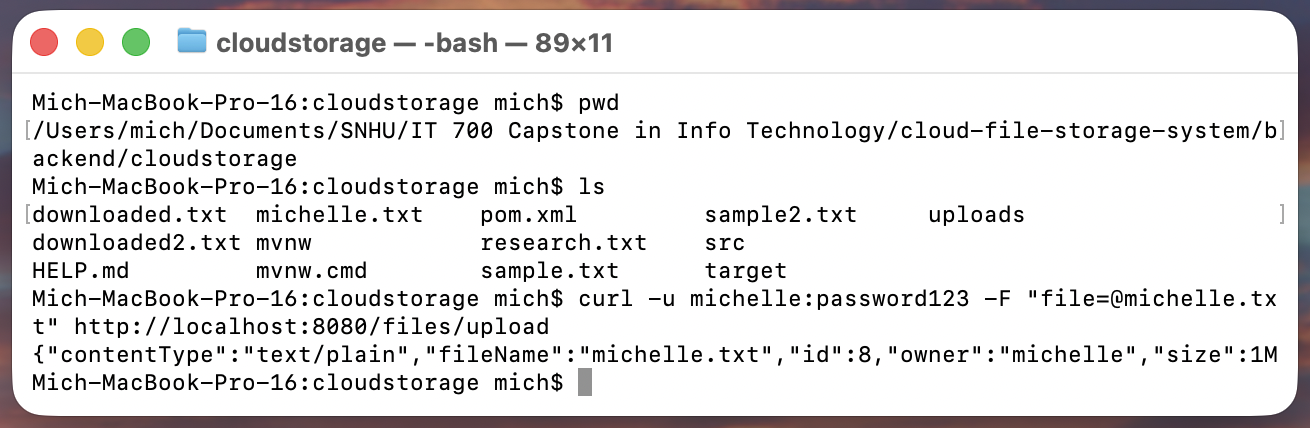
This project is a cloud-based file storage system designed to provide secure and scalable file management for users such as researchers, educators, and entrepreneurs. The system allows authenticated users to upload, download, list, and delete files while maintaining control over file ownership.
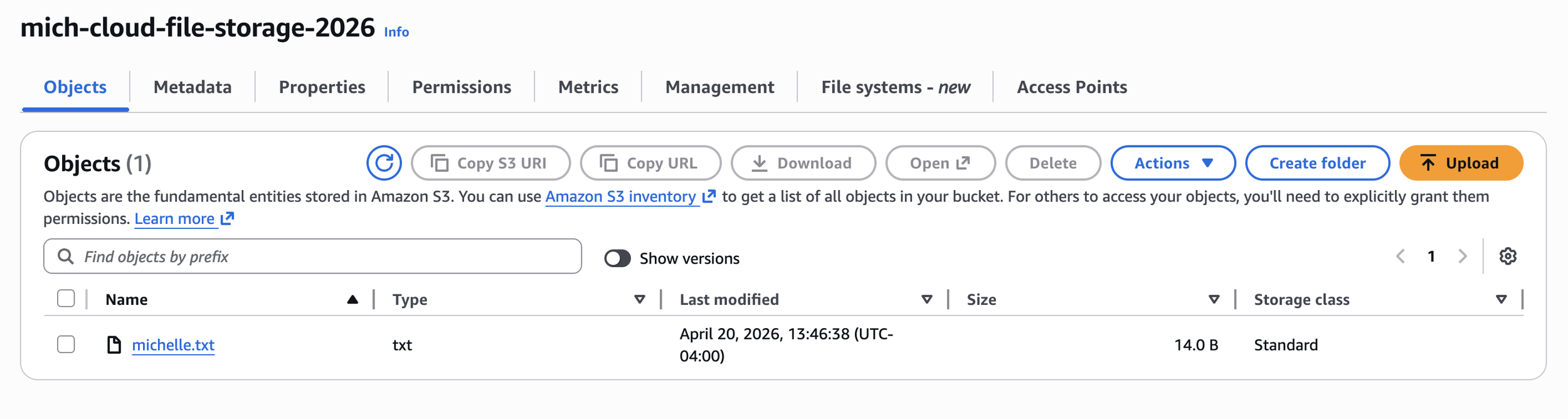
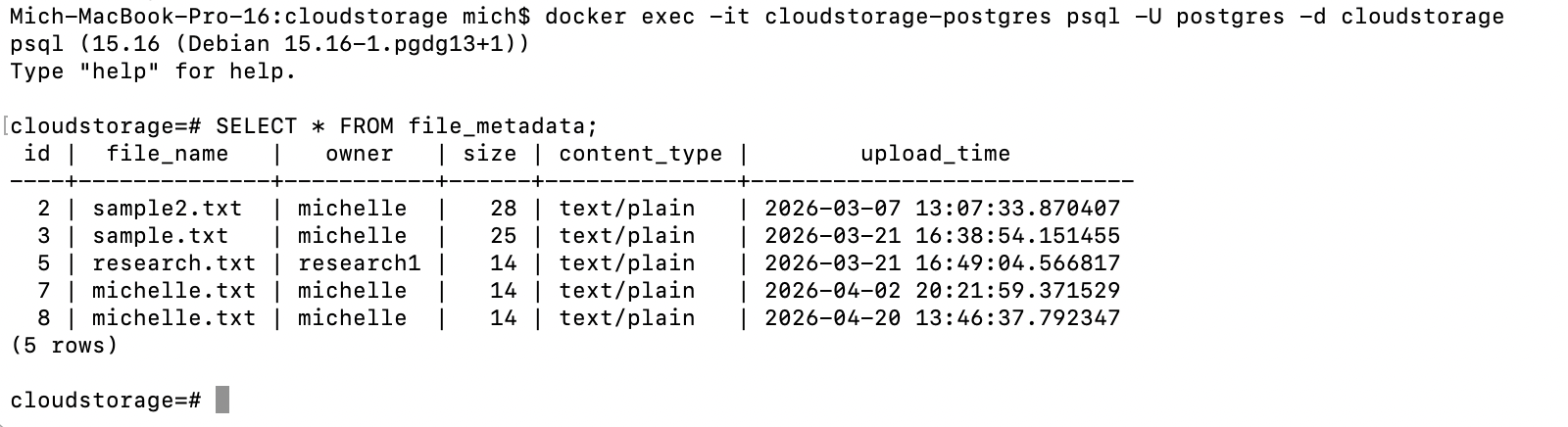
The application uses Amazon S3 for storing file content and PostgreSQL for managing metadata such as file name, owner, and upload time. By separating file storage from metadata, the system follows a scalable architecture commonly used in modern cloud applications.
Key Features
Secure file upload, download, list, and delete operations
Cloud-based storage using AWS S3
Metadata management with PostgreSQL
Authentication and ownership-based access control
RESTful API built with Spring Boot
Unit testing with Mockito for service-layer validation
Configurable environment setup for cloud deployment
Architecture
This system follows a layered architecture:
Client: interacts via API (curl / Postman)
Controller Layer: handles HTTP requests
Service Layer: processes business logic
Repository Layer: manages database operations
PostgreSQL: stores file metadata
AWS S3: stores file content


Challenges & Solutions
Encountered access denied errors when integrating with S3. Resolved by configuring IAM policies with least-privilege access.
Refactored the system from local file storage to AWS S3, requiring updates to file handling logic and architecture.
Implemented authentication and ownership validation using Spring Security after initial development, requiring redesign of access logic.
What I Learned
Gained hands-on experience with AWS S3 and cloud-based storage architecture
Learned how to implement authentication and authorization in a backend system
Strengthened debugging and problem-solving skills with real-world issues
Improved understanding of scalable system design and separation of concerns
Future Improvements
Add file sharing and collaboration permissions
Implement JWT-based authentication
Build a front-end UI using React
Migrate to a fully cloud-native architecture
Add monitoring and logging (AWS CloudWatch)